
Call Center Outsourcing: Strategies and Trends for 2026
Modern businesses face mounting pressure to deliver exceptional customer experiences while managing operational costs effectively. Call center outsourcing has emerged as a strategic solution that enables companies to scale support operations, access specialized expertise, and optimize their customer service infrastructure. As we navigate through 2026, the landscape continues to evolve with technological advancements, changing consumer expectations, and new global opportunities reshaping how organizations approach their customer engagement strategies.
Understanding the Strategic Value of Outsourcing
Contents
- 1 Understanding the Strategic Value of Outsourcing
- 2 Global Location Strategies in 2026
- 3 Technology Integration and AI Transformation
- 4 Risk Management and Quality Assurance
- 5 Industry-Specific Applications
- 6 Selecting the Right Outsourcing Partner
- 7 Future Outlook and Emerging Trends
- 8 Building Long-Term Partnerships
Call center outsourcing represents more than a cost-cutting measure. It delivers transformative value across multiple dimensions of business operations.
Financial Benefits and Cost Optimization
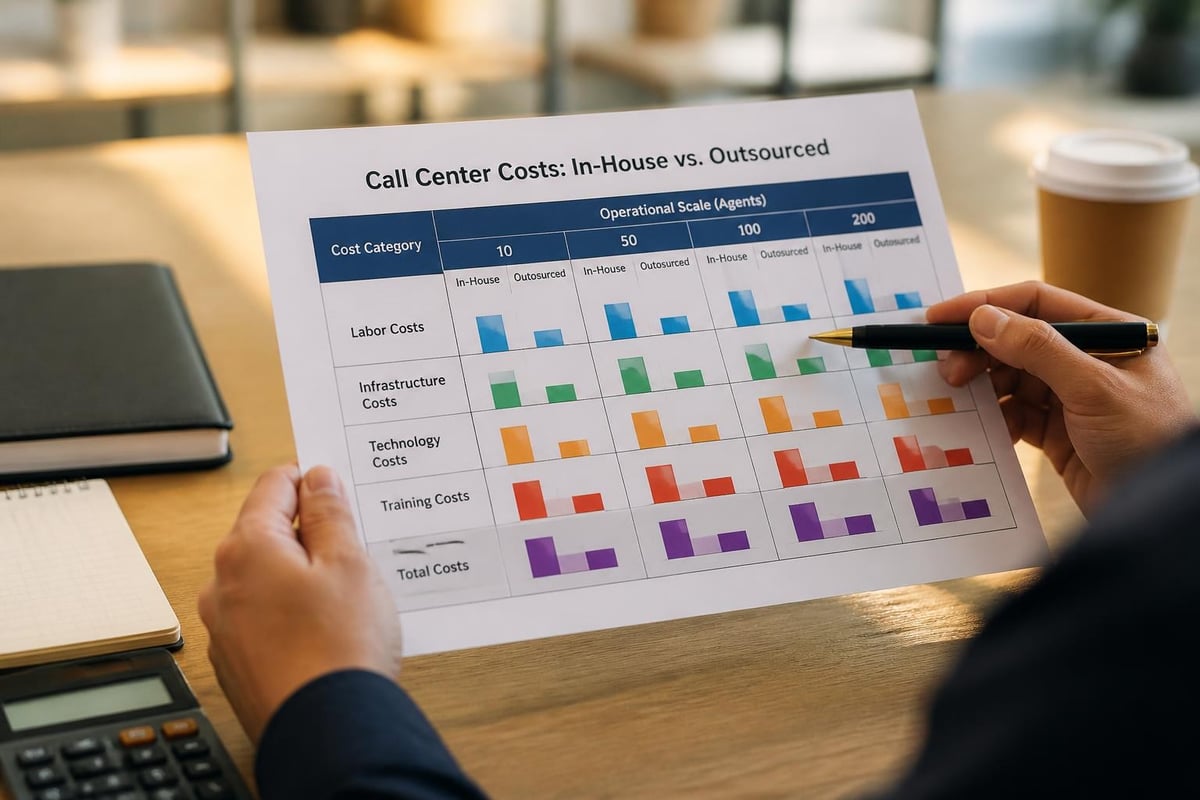
Outsourcing customer service operations typically reduces operational expenses by 30-50% compared to maintaining in-house teams. These savings stem from several factors:
- Lower labor costs in strategic offshore and nearshore locations
- Eliminated overhead expenses for facilities, equipment, and infrastructure
- Reduced training and recruitment costs
- Scalable pricing models that flex with business demand
Access to advanced technology without capital investment represents another significant advantage. Outsourcing providers invest heavily in cutting-edge platforms, analytics tools, and communication systems that would require substantial upfront costs for individual businesses.
Operational Flexibility and Scalability
Business demands fluctuate seasonally and unpredictably. Call center outsourcing solutions provide the agility to scale operations up or down without the constraints of fixed staffing commitments.
A retail company experiencing holiday surges can expand capacity by 200% in weeks rather than months. Conversely, during slower periods, they avoid paying for underutilized resources. This elasticity proves particularly valuable for:
- Seasonal businesses with predictable volume patterns
- Companies launching new products or entering new markets
- Organizations experiencing rapid growth or market shifts
- Businesses testing new service channels or support models
Global Location Strategies in 2026
Geography plays a crucial role in outsourcing success. Different regions offer distinct advantages based on language capabilities, cultural alignment, cost structures, and time zones.
Regional Advantages and Considerations
| Region | Primary Benefits | Ideal Use Cases | Typical Cost Savings |
|---|---|---|---|
| Philippines | Neutral English accent, high education levels | Customer support, technical help desk | 50-60% |
| El Salvador | Spanish/English bilingual, nearshore proximity | Hispanic market support, US business hours | 40-50% |
| South Africa | Multiple language support, strong infrastructure | European and African markets | 45-55% |
| United States | Native speakers, zero cultural distance | Premium service, regulated industries | 20-30% |
The ecommerce sector particularly benefits from multi-location strategies. A company might use Philippine teams for 24/7 technical support, El Salvador for Spanish-speaking customer care, and US-based agents for high-value account management.
Nearshore vs. Offshore Considerations
Nearshore outsourcing to locations like El Salvador offers time zone alignment and cultural proximity while maintaining significant cost advantages. Teams operate during standard business hours, facilitating real-time collaboration and reducing management complexity.
Offshore locations such as the Philippines and South Africa provide maximum cost savings and access to large talent pools. However, they require robust processes for asynchronous communication and may involve time zone coordination challenges.
Recent industry statistics show that 68% of companies now use a hybrid location strategy, combining nearshore and offshore resources to optimize both cost and service quality.
Technology Integration and AI Transformation
Artificial intelligence fundamentally reshapes call center operations in 2026. The integration of AI tools with human agents creates superior customer experiences while driving efficiency gains.
AI-Enabled Workforce Optimization
Modern call center outsourcing providers deploy AI across multiple operational layers:
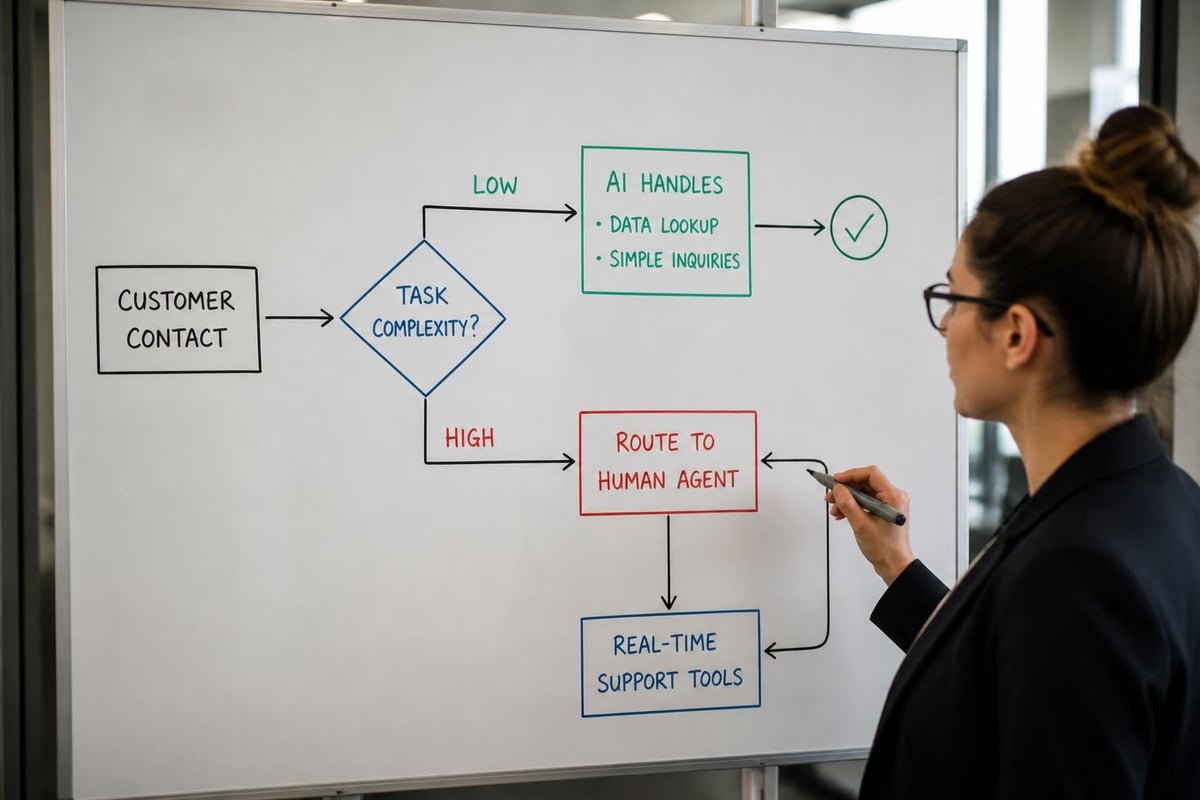
- Intelligent routing directs customers to the most qualified agents based on issue complexity, customer value, and agent expertise
- Real-time agent assistance provides information, suggests responses, and automates data entry during live interactions
- Quality monitoring analyzes 100% of interactions rather than small samples, identifying training opportunities and compliance issues
- Predictive analytics forecast call volumes, optimize scheduling, and anticipate customer needs
AI agent solutions augment rather than replace human capabilities. While AI handles routine inquiries and administrative tasks, human agents focus on complex problem-solving and relationship building where empathy and creativity matter most.
Omnichannel Support Evolution
Customers expect seamless experiences across voice, email, chat, SMS, social media, and messaging apps. According to emerging trends, 82% of consumers use multiple channels during a single customer journey.
Effective outsourcing partners maintain conversation continuity across channels. A customer might start with a chatbot, escalate to SMS, and finish with a phone call without repeating information or losing context.
Risk Management and Quality Assurance
While call center outsourcing delivers substantial benefits, organizations must address potential challenges through careful planning and ongoing oversight.
Common Pitfalls and Mitigation Strategies
Understanding potential disadvantages helps businesses develop preventive measures. Key concerns include:
- Quality consistency: Implement comprehensive training programs, regular quality audits, and performance-based contracts
- Data security: Verify certifications (ISO 27001, PCI-DSS), conduct security audits, and establish clear data handling protocols
- Cultural alignment: Provide cultural training, develop detailed brand guidelines, and conduct regular calibration sessions
- Communication gaps: Establish clear escalation procedures, maintain regular stakeholder meetings, and use collaborative tools
Service level agreements (SLAs) form the foundation of quality management. Well-structured SLAs define measurable performance targets for metrics like average handle time, first-call resolution, customer satisfaction scores, and abandonment rates.
Performance Monitoring and Continuous Improvement
Leading organizations treat their outsourcing partners as extensions of their internal teams rather than external vendors. This partnership approach includes:
- Weekly or bi-weekly performance reviews examining key metrics
- Quarterly business reviews aligning on strategic objectives
- Joint innovation sessions exploring process improvements
- Shared incentive structures rewarding exceptional performance
Real-time dashboards provide transparency into operations. Managers monitor live metrics, listen to call recordings, and identify trends before they become problems. This visibility enables proactive management rather than reactive firefighting.
Industry-Specific Applications
Different sectors have unique requirements that shape their outsourcing strategies. Customization based on industry dynamics determines program success.
Specialized Sector Requirements
The travel industry requires agents who handle time-sensitive booking changes, process complex itineraries, and manage emotional situations when travel disruptions occur. Peak volumes during holiday seasons demand rapid scalability.
Utility companies need teams trained on regulatory compliance, technical troubleshooting, and outage management. Agents must balance customer empathy with accurate technical information during service disruptions.
Sales-focused programs differ fundamentally from customer service operations. Sales call center outsourcing emphasizes lead qualification, objection handling, and conversion optimization rather than issue resolution.

Compliance and Regulatory Considerations
Regulated industries face additional complexity when outsourcing. Healthcare organizations must ensure HIPAA compliance, financial services require adherence to consumer protection regulations, and telecommunications companies navigate specific FCC guidelines.
When evaluating partners, verify their compliance credentials and audit processes. Request documentation of staff training on relevant regulations and review their data handling procedures. The evaluation process should include security assessments and compliance verification beyond standard due diligence.
Selecting the Right Outsourcing Partner
Partner selection determines program outcomes. A methodical evaluation process reduces risk and increases the likelihood of long-term success.
Critical Evaluation Criteria
Assessment should examine multiple dimensions beyond pricing:
Technology infrastructure: Modern cloud-based platforms, redundant systems, disaster recovery capabilities, and integration capabilities with existing business systems.
Talent management: Recruitment processes, training programs, career development opportunities, retention rates, and employee satisfaction metrics.
Geographic footprint: Location options for different service needs, facility quality, telecommunications infrastructure, and political stability.
Financial stability: Years in business, client references, growth trajectory, and investment in innovation.
The Implementation Journey
Successful transitions follow structured phases:
- Discovery and planning (4-6 weeks): Define requirements, establish success metrics, and design operating model
- Partner selection (4-8 weeks): Issue RFPs, conduct site visits, evaluate proposals, and negotiate contracts
- Transition and training (8-12 weeks): Knowledge transfer, agent recruitment and training, technology integration
- Launch and optimization (ongoing): Phased rollout, performance monitoring, iterative improvement
Many organizations use a phased approach, starting with non-critical processes or limited volume to validate the partnership before full-scale migration. This reduces risk and builds organizational confidence.
Future Outlook and Emerging Trends
The call center outsourcing industry continues rapid evolution as technology advances and customer expectations rise.
Remote-First Operations
The shift toward distributed workforces accelerates. Remote agent models expand talent pools beyond geographic constraints while reducing facility costs. However, they require robust technology for collaboration, security, and performance management.
Work-from-home programs also improve agent satisfaction and retention by offering flexibility and eliminating commute times. Many providers now operate hybrid models combining traditional contact centers with remote agents.
Voice Communication Persistence
Despite the growth of digital channels, voice remains critical for complex and emotional interactions. Research shows that voice communication continues to dominate when customers face urgent problems or require detailed explanations.
Advanced voice analytics extract insights from conversations, identifying sentiment, compliance risks, and training opportunities. These tools transform phone calls from ephemeral interactions into valuable data assets.
Sustainability and Social Responsibility
Corporate social responsibility increasingly influences outsourcing decisions. Organizations evaluate partners on environmental practices, labor standards, and community impact alongside traditional operational metrics.
Providers demonstrate commitment through certifications, transparent reporting, and community investment programs. This alignment becomes particularly important for consumer-facing brands where reputation matters.
Building Long-Term Partnerships
The most successful outsourcing relationships evolve from transactional vendor arrangements into strategic partnerships that drive mutual growth.
Collaborative Innovation
Leading organizations involve their outsourcing partners in strategic planning and innovation initiatives. This collaboration generates ideas for process improvements, technology adoption, and customer experience enhancements that benefit both parties.
Regular executive engagement maintains alignment on vision and priorities. While day-to-day operations run through operational contacts, leadership connection ensures the partnership remains strategically relevant.
Performance-Based Relationships
Traditional time-and-materials contracts gradually give way to outcome-based pricing models. Rather than paying for hours worked, companies compensate providers based on results delivered-customer satisfaction scores, sales conversions, or resolved issues.
This alignment creates shared incentives for excellence. Both parties benefit from continuous improvement rather than simply maintaining the status quo.
Knowledge Retention and Transfer
Effective partnerships involve bidirectional knowledge flow. Outsourcing providers bring industry best practices and cross-client insights while clients share product knowledge and brand values.
Documented processes, regular training updates, and collaborative improvement initiatives ensure knowledge remains current and accessible. This prevents dependency on individual agents and maintains service continuity despite staff turnover.
Call center outsourcing delivers compelling benefits when organizations approach it strategically, select qualified partners, and maintain active engagement throughout the relationship. The combination of cost optimization, operational flexibility, and access to specialized expertise positions businesses for sustainable growth while enhancing customer experiences. Focus Services provides global call center outsourcing solutions across the United States, El Salvador, the Philippines, and South Africa, offering scalable programs that integrate AI-enabled workforce optimization with experienced customer service and sales teams to help businesses expand capacity and deliver exceptional results.